
Surface
A brush catches the loose coat it can reach. The problem is not your effort. More coat keeps becoming available after the session ends.
BRUSH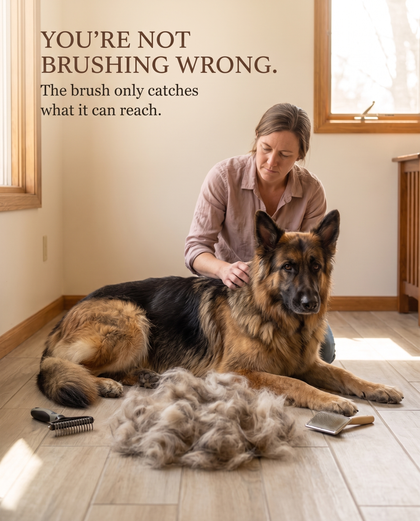
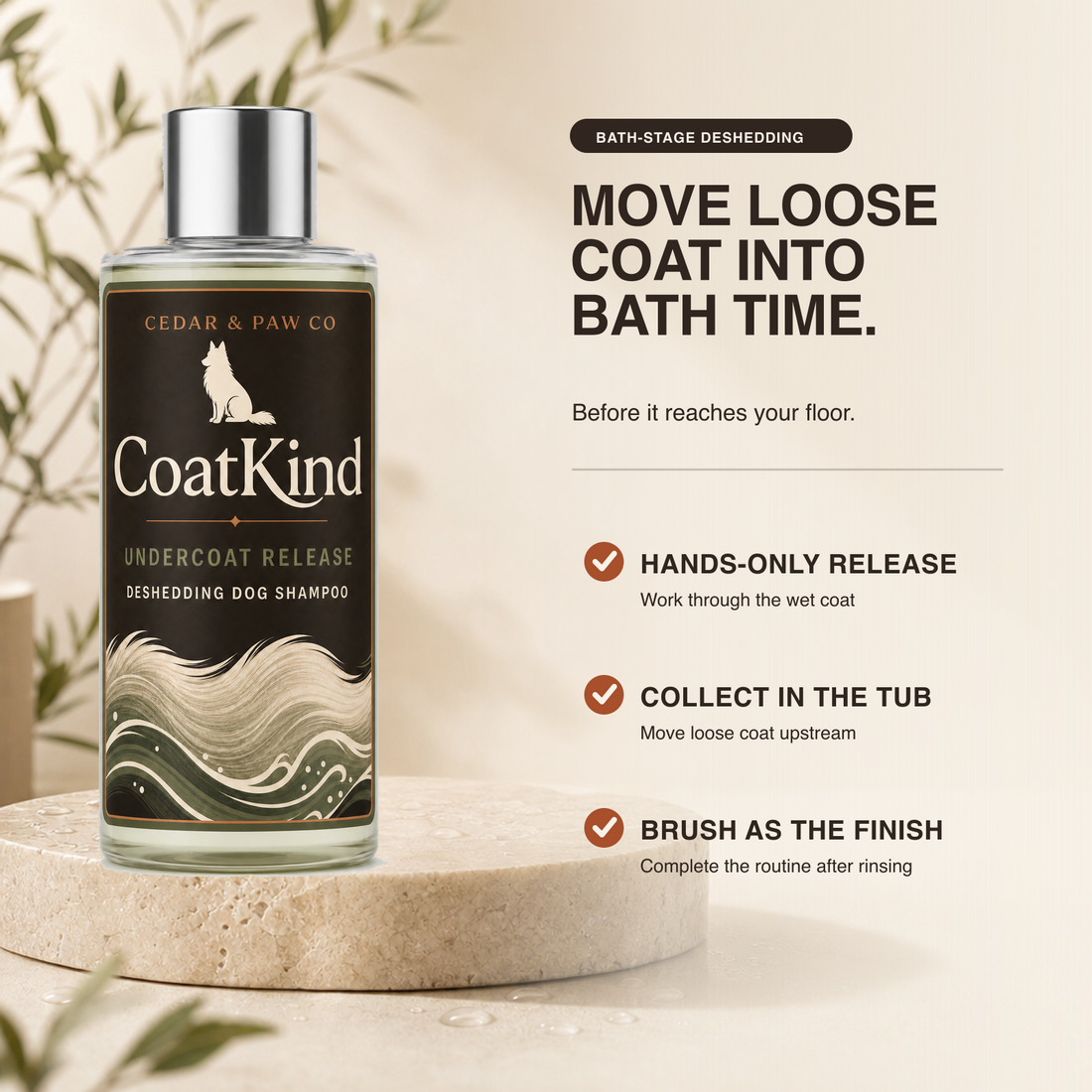
CoatKind · Undercoat Release
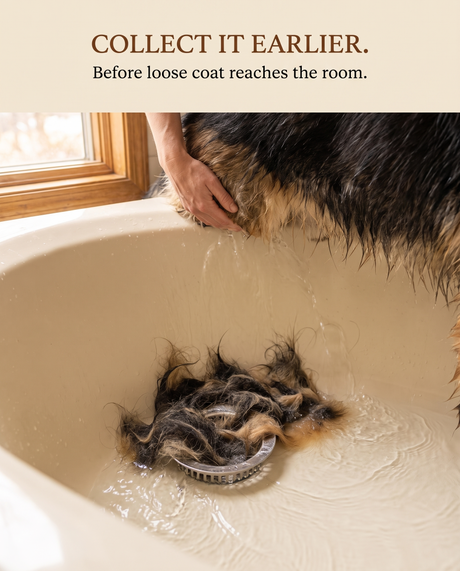
Turn bath time into the upstream step, working through trapped loose coat before it ends up across your floors, furniture, and clothes.
CoatKind is for the dog owner who already brushes, vacuums, and lint-rolls, but still watches the loose coat return. It moves more of that collection into the bath, while hands and water are already working through the coat.
No. Brushing still catches surfaced loose coat. CoatKind changes the order of the routine so the brush becomes the finish after the bath instead of carrying the whole job alone.
Use CoatKind in your real bath routine. If moving loose-coat collection into the tub is not a better fit for your home, contact us within 60 days for a refund.
Who it is for, and how it works
CoatKind is for the dog owner who already brushes, vacuums, and lint-rolls, then finds another pile tomorrow. The answer is not more force or another tool. It is changing the stage: use hands and water to work through the coat during the bath, collect loose undercoat in the tub, then let the brush finish the job.
The better sequence
The loose coat does not become available all at once. That is why a successful brushing session can still be followed by another full pile. CoatKind reorganizes the same care routine around the stage where your hands can work across the wet coat.
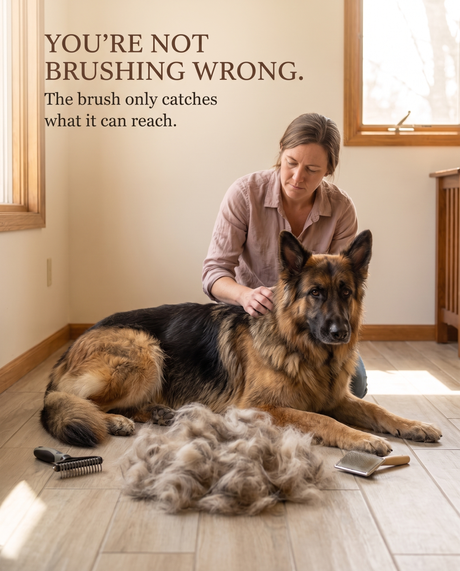
A brush catches the loose coat it can reach. The problem is not your effort. More coat keeps becoming available after the session ends.
BRUSHWater and both hands work across the wet coat, moving the collection step earlier in the routine.
RELEASE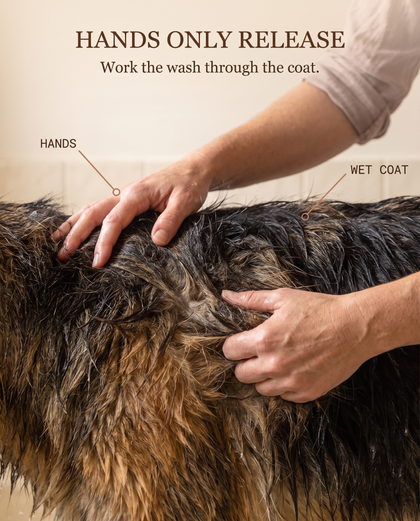
After the bath, the brush finishes the coat instead of being asked to solve the entire shedding cycle by itself.
BRUSH AGAIN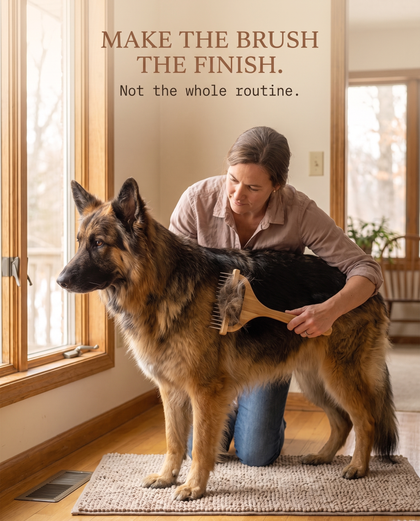
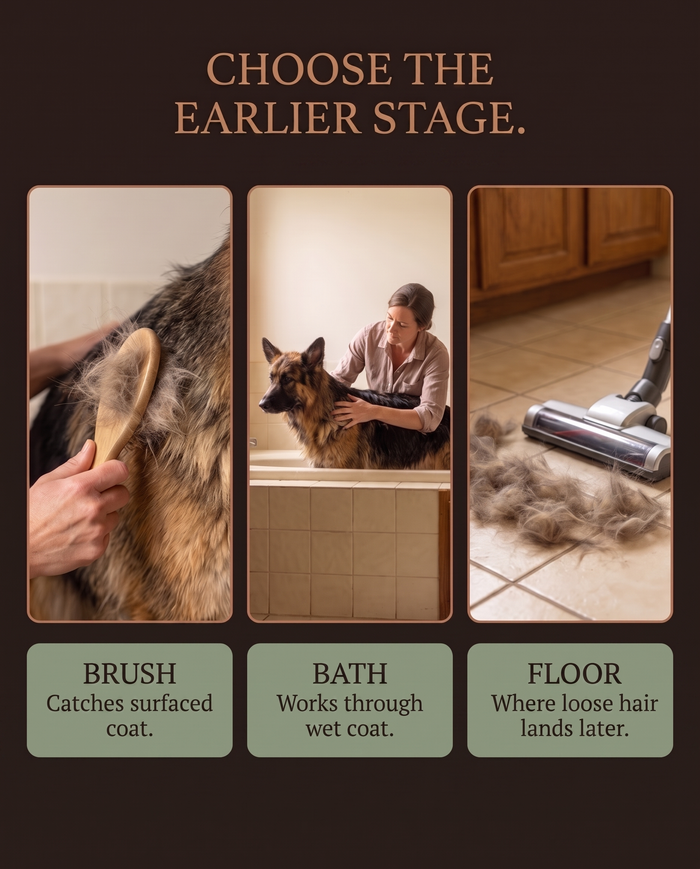
Shedding is normal. The goal is better collection, earlier in the routine.
Why the pile keeps returning
You are not brushing wrong. You are asking one stage to do the whole job.
A brush works where it can make contact and catch loose hair. More undercoat becomes available after the session, which is why the same pile seems to refill. A vacuum and lint roller work even later, after the hair has already left the dog and traveled through the room.
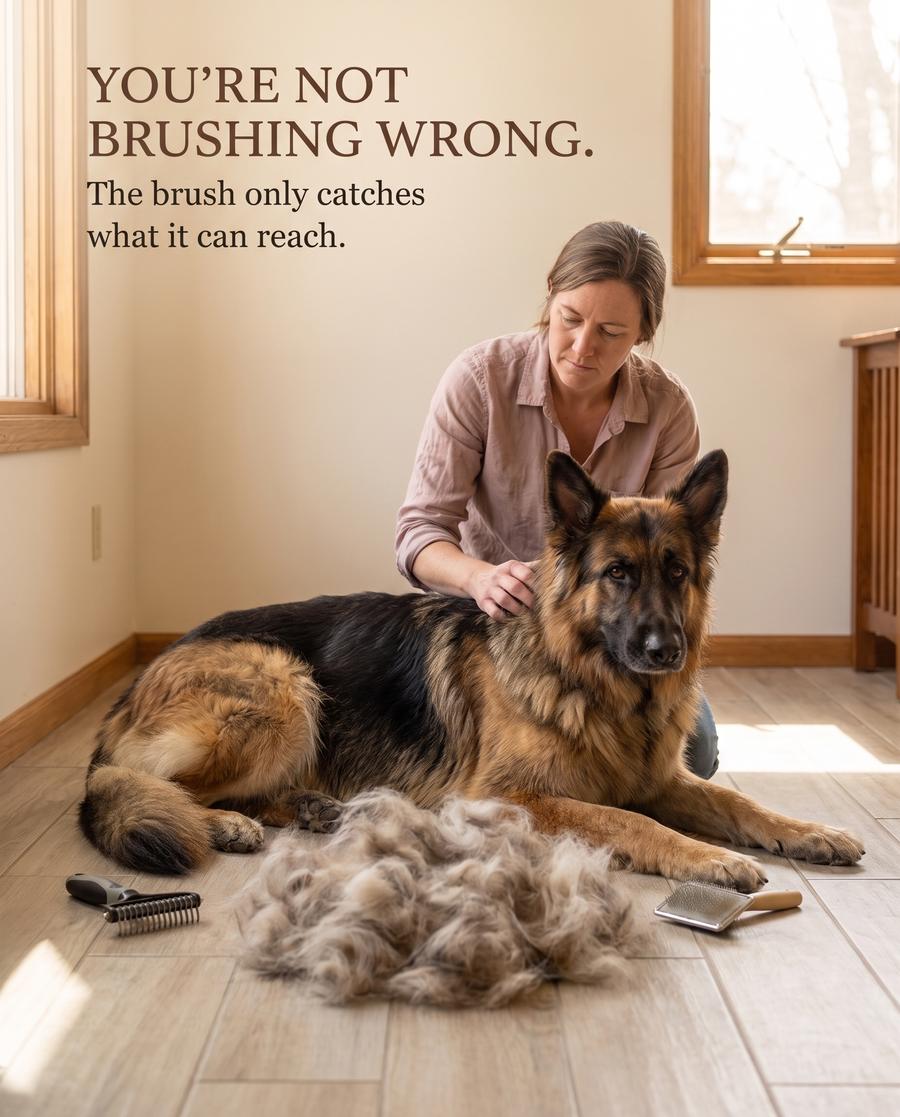

The Anchored Undercoat
Loose undercoat can remain held inside the surrounding live coat even after it has detached. The brush collects what has reached the surface and what its teeth can catch. It does not mean the brush failed. It means more loose coat is still working its way through.
That is the race dog owners keep losing: one successful brush pile today, another pile tomorrow, and more hair across the room between sessions. CoatKind moves another collection step upstream, before that hair finishes the trip.
The problem is the stage, not your effort.
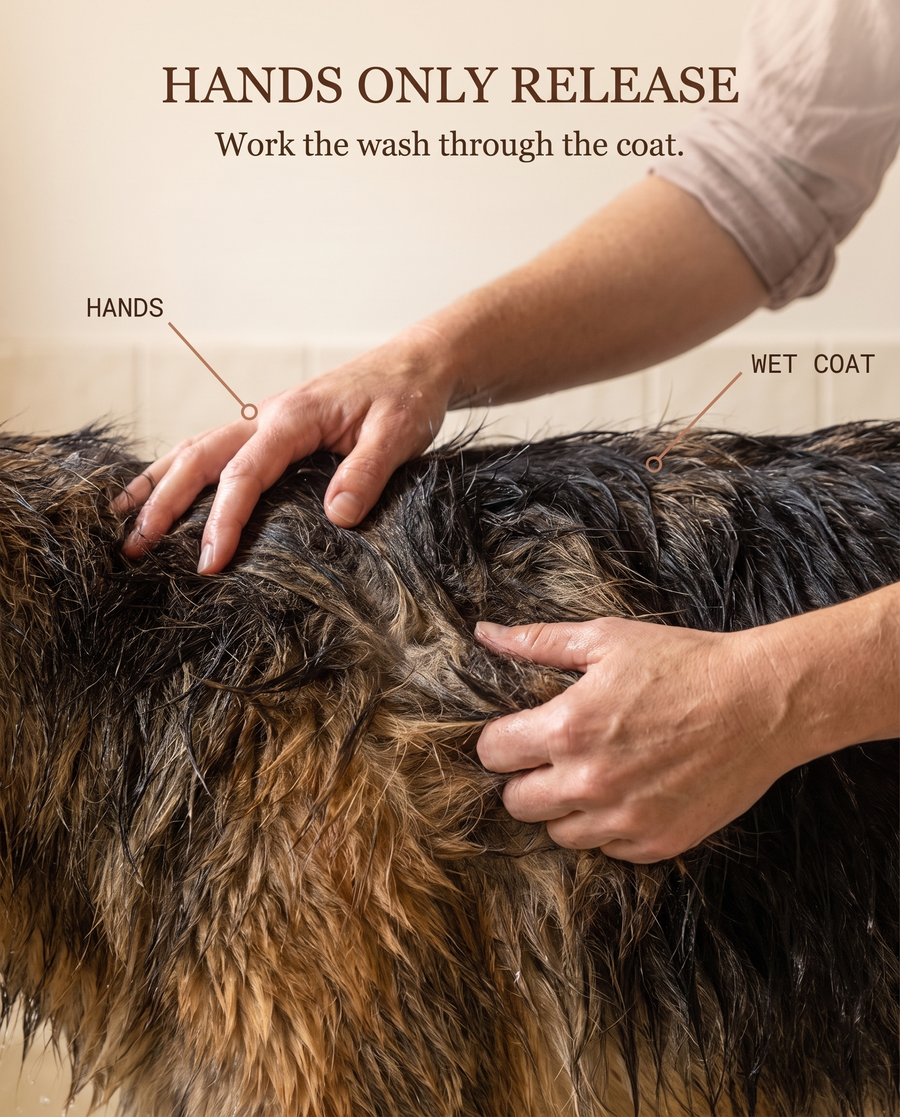
Hands Only Release
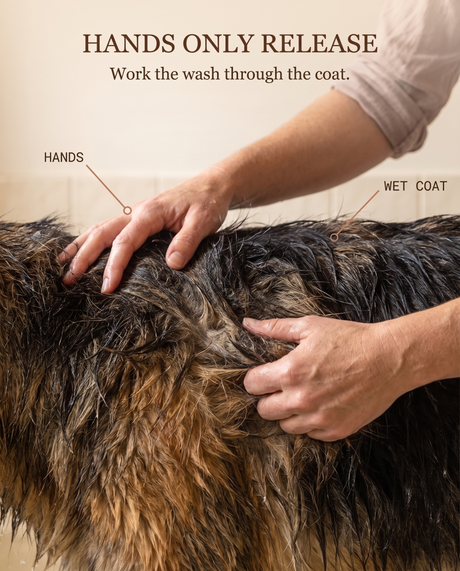
During the bath, both hands can work across the coat while water moves through it. You are not dragging one set of teeth over the top layer. You are massaging across the body and giving loose undercoat another route out.
The rinse carries that released coat toward the tub instead of letting it continue toward the floor, couch, bedding, and clothes. Then the brush returns after the bath to catch what has surfaced.
Work the wash through the coat. Rinse. Then finish with the brush.
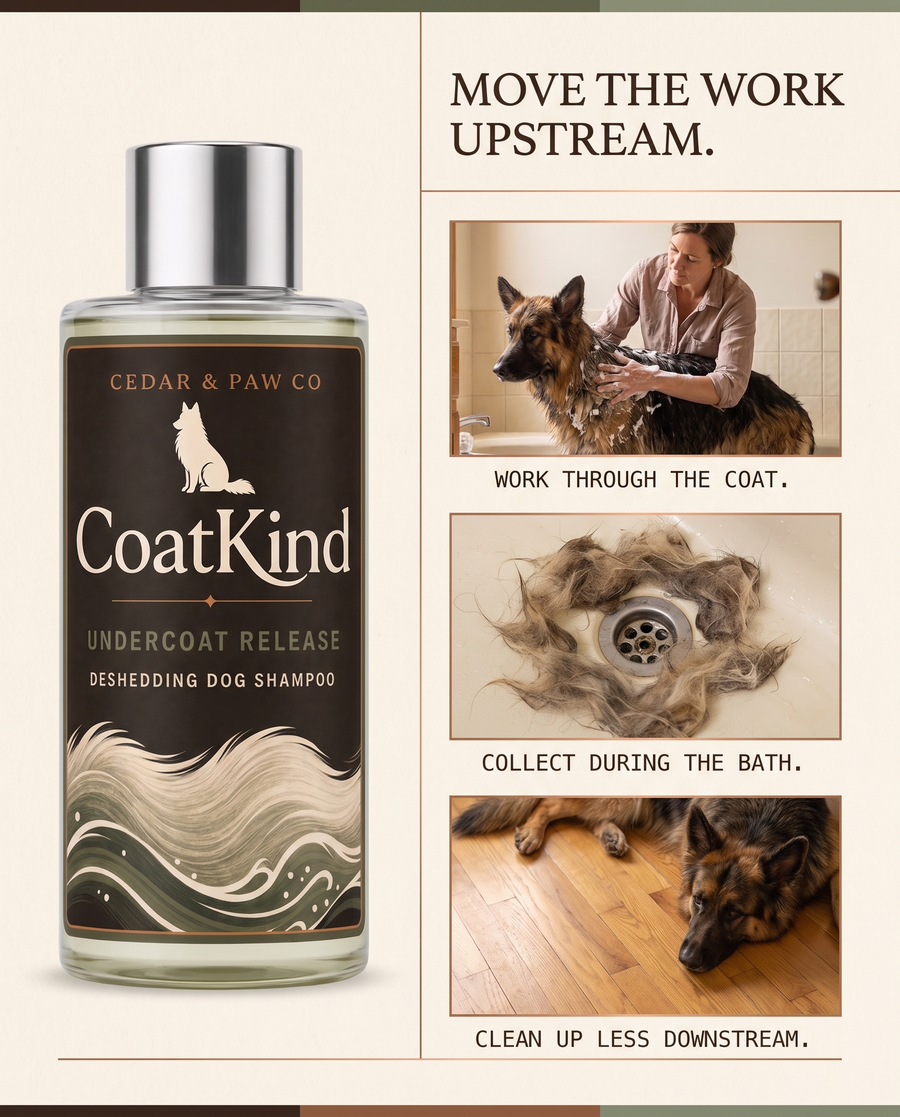
Move the work upstream
Brushing is useful. Vacuuming is useful. Lint rollers are useful. They simply work at different points in the same journey. The farther loose hair travels, the more surfaces you have to clean after it.
CoatKind adds an earlier collection point while the dog is already in the tub. The goal is not a dog that never sheds. The goal is more loose coat leaving during the routine you control.
Earlier collection is the advantage.
The bath-stage routine
No aggressive new tool stack. Use the bath to work across the coat with your hands, rinse the released coat away, and return to your brush as the finishing step.
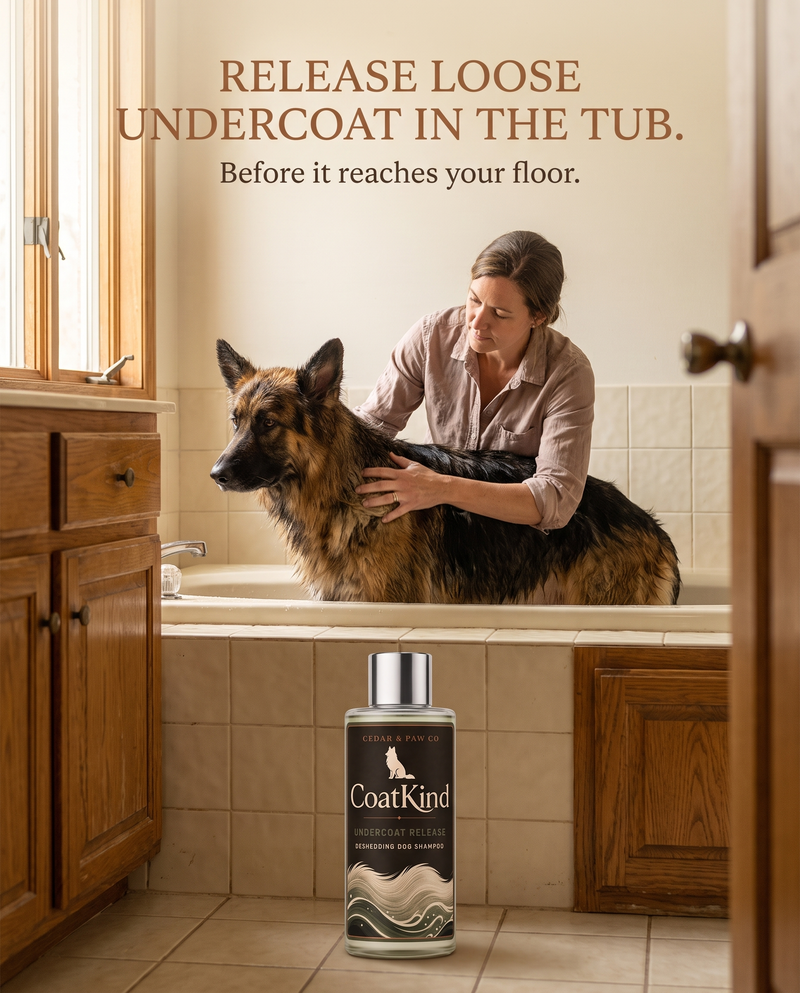
Start with the coat thoroughly wet so your hands can move through it evenly.
Massage the wash across the coat instead of treating the top layer as the whole job.
Rinse thoroughly and let the tub catch what would otherwise travel into the room.
Once the coat is ready, brush again to collect what has surfaced and complete the routine.
Three stages, three different jobs
Brushing, bath-stage release, and household cleanup all have a role. CoatKind wins its place by acting earlier, while the loose coat is still on the dog and the tub is ready to collect it.
| Stage | Brushing | Vacuuming | CoatKind bath |
|---|---|---|---|
| When it works | On surfaced loose coat | After hair reaches the room | During the bath |
| Where hair is collected | In the brush | From floors and furniture | In the tub |
| Best role | Finishing the coat | Catching what escapes | Moving collection upstream |
| What it does not do | Reach every layer at once | Act before hair travels | Stop normal shedding |
CoatKind does not replace brushing or promise to stop normal shedding. It moves more collection into the bath.
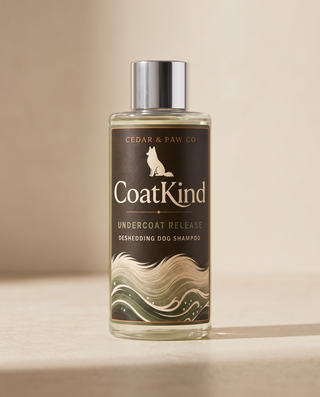
Use CoatKind in your actual routine, with your dog, your brush, and the floors you clean. If moving loose-coat collection into the bath is not a better fit for your home, contact us within 60 days for a refund.
Before the next bath
No. Shedding is normal and continues. CoatKind changes where more of the loose coat is collected by moving the work into bath time.
Yes. The brush still has an important job. CoatKind makes it the finishing step rather than the only step.
One bottle is presented as a one-month supply. The three-bottle and five-bottle bundles give you a three-month or five-month supply at a lower cost per bottle.
Work the wash through the wet coat with both hands, then rinse thoroughly. The goal is to collect loose undercoat during the wash and finish with your usual brush routine.
Shedding is normal and continues. CoatKind is made to move more loose-undercoat collection into bath time, not to stop normal shedding or replace brushing or professional grooming.